People in the room
Frank A. Pattison, Charles E. Pattison, Pattison BrothersThe article says the entire electric plant of the building, including telephones, was directly under Pattison Brothers supervision and plans.
1897 / Tall-building plant
The St. Paul Building is the office stepping into height. It is not merely a commission; it is a test of whether a skyscraper can be made orderly inside.

A 1902 Library of Congress stereograph looks north from the St. Paul Building, near the moment when skyscrapers were becoming vertical electrical problems.
Broadway and Ann Street, Manhattan
Frank's 1897 article gives the intellectual frame: elevators, light, heat, power, and safety have to be considered together. The St. Paul notice gives the family a named building where that frame lands.
People in the room
Frank A. Pattison, Charles E. Pattison, Pattison BrothersThe article says the entire electric plant of the building, including telephones, was directly under Pattison Brothers supervision and plans.
What it can carry
This can carry a concrete named building and the firm's responsibility for a whole electric and telephone plant.
What remains careful
It does not prove the firm designed the architecture or every mechanical system in the building.
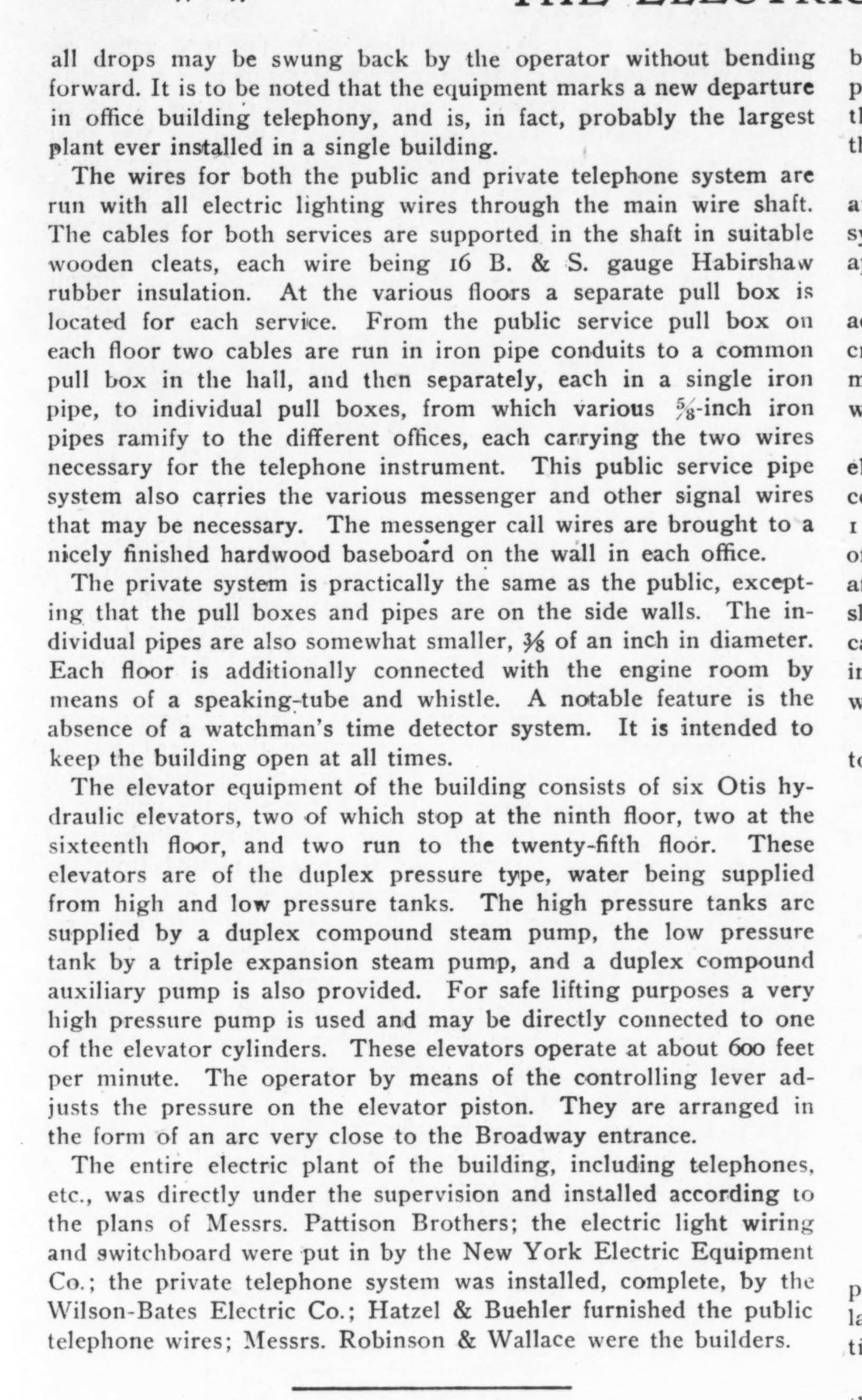
Project notice / March 27, 1897
The notice says the entire electric plant, including telephones, was under Pattison Brothers supervision and plans. That word entire matters.